


Bathroom aids at home make washing, bathing and using the toilet safer and easier for anyone with reduced strength, balance or mobility. From grab rails to raised toilet seats, the right equipment can help someone keep their independence and dignity, without the fear of a fall.
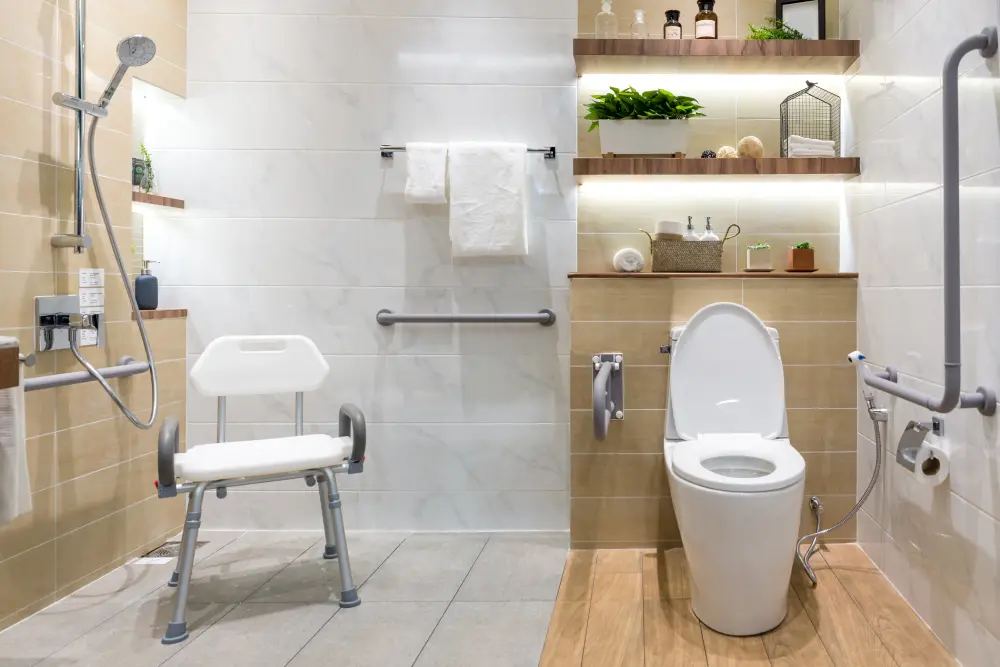
This guide aims to take you through the most useful bathroom aids, how to get them, and how Forest Homecare’s home care support in Essex and Suffolk fits around them.
Table of Contents
A practical guide to bathroom aids at home in summary
|
Why bathroom aids matter
Bathroom aids reduce risk by providing extra support exactly where it’s needed, making everyday washing and toileting safer without taking away someone’s independence.
Falls are a serious concern for older people living at home. Around a third of people aged 65 and over, and around half of people aged 80 and over, fall at least once a year, according to the National Institute for Health and Care Excellence (NICE).
In 2022/23 alone, there were around 210,000 emergency hospital admissions in England related to falls among people aged 65 and over, NICE reports. Because bathrooms combine wet floors, hard edges and repeated sitting and standing, they carry a disproportionate share of that risk.
Using the right bathroom aids is often what allows someone to keep managing their own personal hygiene safely, rather than needing full-time help sooner than necessary.
Grab rails and support handles
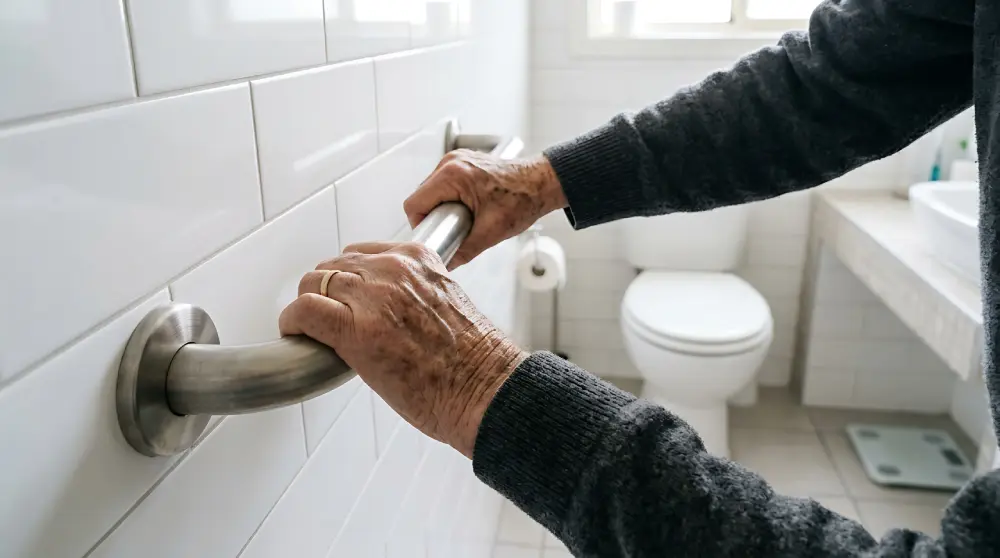
Grab rails are fixed handles mounted to the wall that give something stable to hold onto when moving around a wet bathroom. They’re usually the first bathroom aid families consider, because they’re inexpensive, straightforward to fit and effective at reducing the risk of a slip.
Common places to fit grab rails include:
- Beside the toilet, to help with sitting down and standing up
- Inside the bath or shower, at a height that suits the user
- At the entry point to a walk-in shower or over the bath edge
- Near the sink, for extra stability while washing or brushing teeth
Some rails have a textured, non-slip surface, which makes them easier to grip with wet hands. A trained assessor can advise on the correct height and position, since a poorly placed rail can be less useful, or even unsafe.
“Grab rails and raised toilet seats solve a lot of problems, but they don’t solve all of them. We regularly see families who’ve done everything right with equipment, and their loved one is still struggling, because what’s really needed is a second pair of hands, not another gadget. That’s usually the point where a carer coming in for personal care support makes the biggest difference.” – Tracey Harris, Head of Care |
Toilet aids
Toilet aids reduce the physical effort of sitting down and standing up, which can otherwise be one of the most difficult and risky movements in the bathroom. They’re a small change that often makes a big practical difference.
The most common toilet aids are:
- Raised toilet seats, which reduce how far someone needs to bend to sit or push up from standing
- Toilet frames, offering a sturdy support to hold onto on both sides
- Toilet safety rails, which bolt onto the existing toilet where wall-mounted rails aren’t possible
- Commodes, for anyone who struggles to reach the bathroom in time or at all
Choosing the right toilet aid usually depends on someone’s height, weight and the layout of the bathroom, so it’s worth trying a few options or getting professional advice before buying.
Non-slip flooring mats
Non-slip flooring and mats tackle the root cause of many bathroom falls: wet, slippery surfaces. They’re one of the cheapest and easiest bathroom aids to introduce, and can be combined with almost any other equipment on this list.
Simple changes that help include:
- Fitting a non-slip mat inside the bath or shower tray
- Using a non-slip bath mat on the floor just outside the bath or shower
- Choosing slip-resistant flooring if renovating the bathroom
- Keeping the floor clear of clutter and drying spills promptly
Good lighting also plays a part. A well-lit bathroom, particularly for night-time visits, makes it far easier to spot uneven flooring, water on the floor or an obstacle underfoot.
How home care works alongside bathroom aids
Bathroom aids reduce risk, but equipment alone doesn’t replace a second pair of hands for someone who needs more consistent support with washing, bathing or personal care.
This is where a home care worker can make the biggest difference, working alongside whatever equipment is already in place.
Our home care service is built around each person’s own routine and existing equipment, rather than a fixed approach, so support can start small and increase as needs change.
Frequently asked questions
Are bathroom aids available free on the NHS?
Some bathroom aids, such as raised toilet seats, rails and bath lifts, may be provided free of charge by your local council following an occupational therapy assessment, though this varies by area and eligibility. Smaller items like non-slip mats are usually bought directly from a retailer.
What is the most important bathroom aid to start with?
There’s no single answer, since it depends on the specific difficulty someone is having, but grab rails near the toilet and bath, along with non-slip mats, are often the simplest and most immediately useful starting point.
Can I fit bathroom aids myself?
Simple items like non-slip mats or a bath board don’t usually need professional fitting, but grab rails and toilet frames should be installed securely into a solid wall or fixture by someone competent to do so, to make sure they can safely take a person’s full weight.
Do bathroom aids mean someone is losing their independence?
No, the opposite is usually true.
Using the right bathroom aids often helps someone continue washing and using the toilet independently for longer, rather than needing full-time help sooner.
How do I know if my relative needs a bathroom aid or more hands-on care?
If aids alone aren’t enough, such as if your relative struggles to balance even with a rail, forgets steps in their washing routine, or shows signs of increasing fatigue or confusion, it may be time to consider additional support from a carer alongside the equipment.
Get support with personal care from Forest Homecare
Bathroom aids can make a real difference, but for some families, equipment alone isn’t quite enough. If your loved one needs a helping hand with washing, bathing or getting ready for the day, Forest Homecare can support them safely at home, working around whatever aids and routines are already in place.
Get in touch for a free Care Needs Assessment and we’ll talk through what would help most for your case.