


PEG feeding, stoma and catheter care at home can feel daunting when a loved one is discharged from hospital with new equipment and a routine to learn.
All three are common forms of clinical support, and with the right training and care in place, they can be managed safely and comfortably at home rather than in a hospital setting.
This guide explains what each type of care involves, what families can expect during the transition home, and how Forest Homecare’s complex care service supports people with these needs across Essex and Suffolk.
Table of Contents
A short summary
|
Understanding complex care needs at home
Today, complex care refers to clinical support that goes beyond everyday personal care, typically involving specific medical equipment, routines or monitoring that require additional training.
PEG feeding, stoma care and catheter care all fall under this category, and each is usually introduced following a hospital procedure or a change in someone’s health.
What links all three is that they can be managed safely at home rather than requiring a hospital stay, provided the person, their family and any carers involved understand the routine and know when to seek help.
District nurses, specialist nurses and GPs typically remain involved even once someone is home, offering ongoing support alongside any home care already in place.
Families are often given training before discharge, but the first few weeks at home can still feel uncertain, which is where consistent, trained support makes a real difference.
What PEG feeding at home involves
A PEG tube, short for Percutaneous Endoscopic Gastrostomy, is a feeding tube inserted directly into the stomach through the skin, used when someone can’t eat or drink enough safely by mouth. It can deliver food, fluids and medication either to meet all of a person’s nutritional needs or to supplement what they’re still able to eat.
According to Kent Community Health NHS Foundation Trust, a PEG tube can be used either temporarily or permanently, and daily care involves checking the tube hasn’t moved, cleaning around the site, and monitoring for signs of infection or displacement.
Feeds are usually given through a syringe or a pump, following a plan set by a dietitian, and the tube itself sits discreetly under clothing between feeds.
Most people manage PEG feeding at home with support from family, carers, a district nurse or a specialist nurse, rather than needing to travel to hospital for routine feeds.
Any sudden pain, fresh bleeding or leakage around the site should always be reported to a nurse or GP promptly.
“Families often arrive home from hospital with a folder of instructions and a genuine fear of getting something wrong. What actually settles people isn’t more paperwork; it’s having someone alongside them the first few times who’s done this routine hundreds of times before. Once that confidence builds, most families manage brilliantly, and our role shifts to being a steady, reliable presence rather than doing everything for them.” – Tracey Harris, Head of Care |
What stoma care at home involves
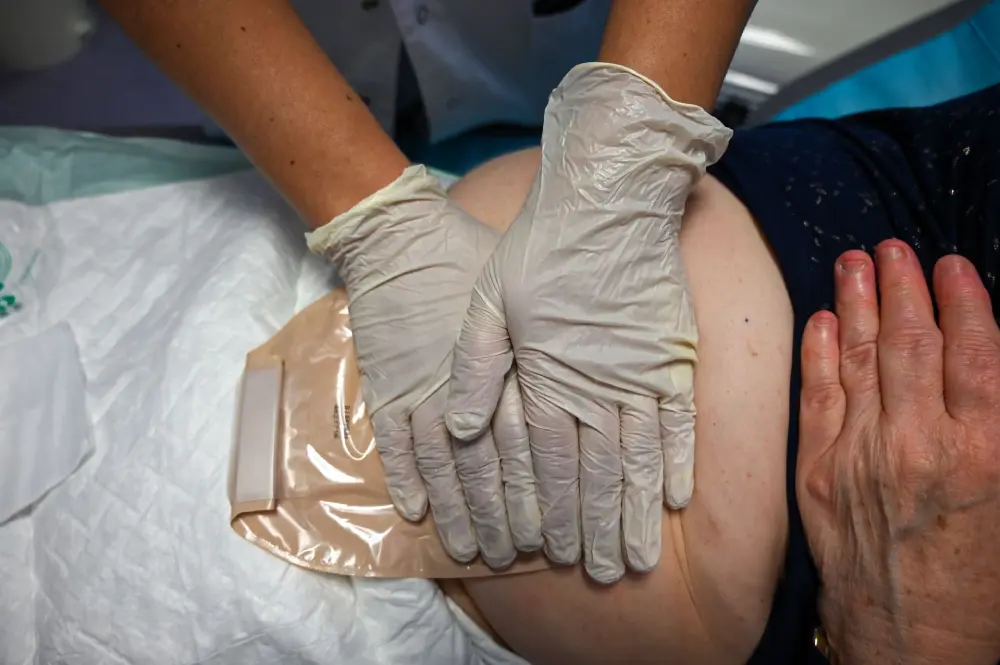
A stoma is a surgically created opening on the abdomen that allows waste to leave the body into an external pouch, most often as a colostomy or an ileostomy depending on which part of the bowel is involved.
Stoma care means learning to manage that pouch and the surrounding skin as part of a daily routine.
Colostomies and ileostomies can be temporary or permanent, and the routine involved typically includes emptying or changing the pouch, keeping the skin around the stoma clean and protected, and knowing what changes in colour, output or the surrounding skin should prompt a call to a stoma nurse.
According to Leeds Community Healthcare NHS Trust, most people find that stoma care becomes a routine part of daily life over time, and normal activities like bathing and showering can usually continue as before.
Adjusting to a stoma, both practically and emotionally, often takes longer than families expect, and having consistent support during this period tends to build confidence faster than managing it alone.
Frequently asked questions
Can a family carer manage PEG feeding, stoma or catheter care without professional training?
Family members are usually shown how to manage these routines before hospital discharge, and ongoing support from a district nurse or specialist nurse continues once home, so training shouldn’t be skipped or assumed.
Anyone unsure about a specific step should ask their nursing team for a refresher rather than guessing.
How often does a urinary catheter need to be changed?
Catheters are typically changed on a schedule agreed with a healthcare professional, often around every twelve weeks, though this varies depending on the type of catheter and individual circumstances. Signs like pain, blockage or infection may mean a change is needed sooner.
Is a PEG tube permanent?
Not always. Some people use a PEG tube long-term, while for others it’s a temporary measure used until they’re able to eat and drink safely again, at which point it can be removed.
Can someone with a stoma still live an independent life?
Yes, most people continue with work, hobbies, bathing, showering and daily life much as before once they’ve adjusted to their stoma routine. It typically takes time and support to build that confidence rather than happening immediately.
What should trigger an urgent call to a nurse or GP for PEG, stoma or catheter care?
Sudden pain, fresh bleeding, leakage around a PEG or stoma site, a catheter that stops draining, or signs of infection such as fever should always be reported promptly rather than managed alone.
Contact details for the relevant specialist nurse or district nursing team should be kept easily accessible at home.
Get complex care support from Forest Homecare
Bringing a loved one home with PEG feeding, a stoma or a catheter is a significant adjustment, and it’s completely normal to feel unsure at first.
Forest Homecare’s complex care team is trained to support these routines with skill and genuine care, working alongside your existing nursing support.
Get in touch for a free Care Needs Assessment and we’ll talk through exactly what support would help.